
AI Enhancing Drug Discovery Processes Through Advanced Data Analysis
Advanced data analysis, powered by artificial intelligence, is revolutionizing how researchers approach drug discovery by synthesizing vast datasets into actionable insights. AI algorithms excel at identifying patterns and predicting molecular behavior, thereby considerably reducing the trial-and-error phase traditionally associated with laboratory research. These capabilities enable scientists to prioritize compounds with the highest therapeutic potential, thus accelerating the development pipeline without eliminating the essential role of hands-on experimentation.
Key advantages of integrating AI into drug discovery include:
- Enhanced predictive accuracy for compound efficacy and safety
- Streamlined identification of novel drug candidates from complex biological data
- Reduction of costs and time in early-stage pharmaceutical research
| Phase | Traditional Effort | AI-Accelerated Effort | Outcome |
|---|---|---|---|
| Target Identification | Months of trial and error | Weeks of data-driven screening | More precise targeting |
| Lead Optimization | Multiple lab iterations | Simulated modeling and prediction | Greater efficiency and fewer failures |
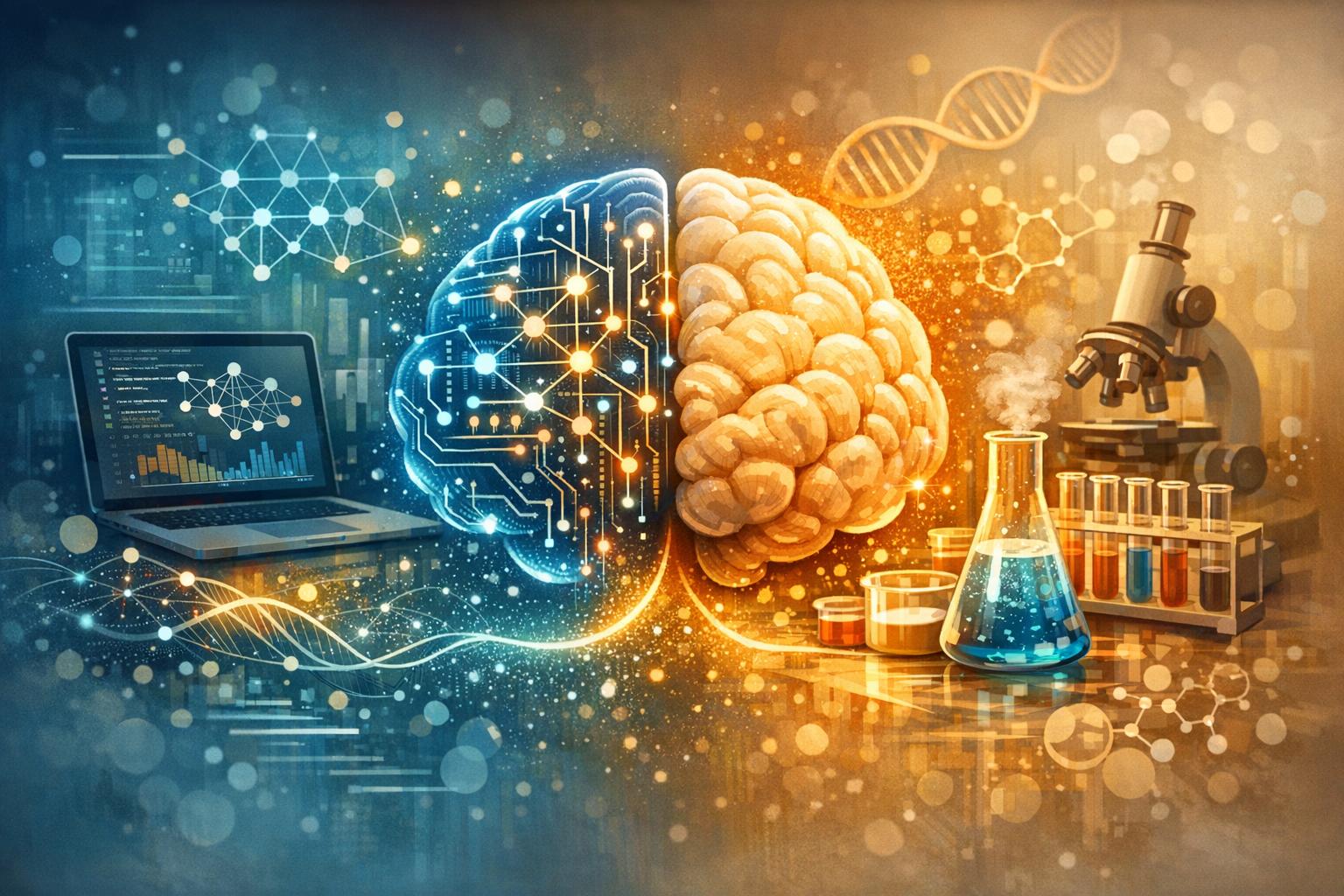
Integrating Machine Learning Models with Traditional laboratory Methods
In the evolving landscape of drug discovery, machine learning models are proving to be powerful allies, augmenting the capabilities of traditional laboratory approaches rather than supplanting them. By harnessing vast datasets and sophisticated algorithms, these models can predict molecular interactions, optimize compound properties, and identify promising candidates at an unprecedented speed. This collaborative synergy allows researchers to allocate more time and resources toward experimental validation, ensuring that computational predictions are rigorously tested within controlled lab environments.
Key benefits of this integrated approach include:
- Enhanced accuracy through cross-validation of ML predictions with empirical results
- Streamlined prioritization of compounds for synthesis and testing
- Reduction in costly trial-and-error experiments by focusing on data-driven insights
- Improved understanding of biological mechanisms via model-informed hypotheses
| Aspect | Traditional Lab Methods | Machine Learning Contribution |
|---|---|---|
| Data Utilization | Experimental observations | Pattern recognition from large datasets |
| throughput | Limited by manual processes | High-speed prediction and screening |
| Validation | Physical experiments confirm results | Generates hypotheses for lab testing |
Addressing Challenges in AI-Driven Drug Development for Reliable Outcomes
Integrating artificial intelligence into drug discovery is a powerful approach, yet it faces notable hurdles that must be overcome to ensure dependable outcomes. One primary challenge lies in the quality of data feeding AI algorithms. Poorly curated or incomplete datasets can lead to misleading predictions, creating a domino effect of inefficiencies down the line. Additionally, the “black box” nature of manny AI models complicates the interpretability of results, making it difficult for researchers to validate findings without extensive lab-based follow-up. Bridging this gap requires ongoing collaboration between computational scientists and lab researchers to refine model clarity and tailor algorithms for diverse biochemical contexts.
Moreover, successful AI-driven drug development demands robust integration of interdisciplinary expertise, balancing automation with human insight. Key challenges include:
- Data heterogeneity: Integrating varied data types such as genomic, proteomic, and chemical compound information while maintaining consistency.
- Regulatory compliance: Ensuring AI outputs meet stringent pharmaceutical standards for safety and efficacy.
- Scalability issues: Transitioning promising in silico findings into scalable laboratory and clinical workflows.
- ethical considerations: Addressing biases in training data and assessing impacts on patient populations.
| Challenge | Mitigation Strategy |
|---|---|
| Data Quality | Implement rigorous data validation and cleaning protocols |
| model Interpretability | Adopt explainable AI techniques and visualization tools |
| Scalability | Develop modular pipelines combining AI predictions with experimental validation |
| Regulatory Hurdles | engage with regulatory bodies early to align AI development with compliance requirements |
Best Practices for Collaborative Human and Artificial Intelligence Research
Successful collaboration between human experts and AI systems hinges on clear communication and mutual augmentation rather than replacement. Researchers must prioritize transparency in AI algorithms, ensuring that the rationale behind predictions or suggestions is interpretable by human scientists. This fosters trust and allows researchers to critically evaluate AI outputs instead of accepting them blindly. Additionally, establishing well-defined roles where AI handles complex data processing and pattern recognition, while humans provide domain knowledge and contextual decision-making, creates a synergy that accelerates drug discovery without compromising scientific rigor.
Best practices emphasize continuous feedback loops and iterative refinement: human insight guides AI model adjustments, and AI-generated hypotheses inspire new experimental designs. Integration of diverse expertise and data sources is key, supported by collaborative platforms that allow seamless data sharing and version control. Below is a concise overview of essential pillars supporting this collaboration:
| Core Element | Description |
|---|---|
| Transparency | Explainable AI models for interpretability |
| Defined Roles | AI for computation, humans for judgment |
| Continuous Feedback | iterative improvements via expert review |
| Collaborative Tools | Shared platforms for streamlined workflows |
| Interdisciplinary Integration | combining data science, biology, and chemistry |
- Maintain ethical standards ensuring AI-driven decisions respect patient safety and confidentiality.
- Encourage diversity in research teams to mitigate biases inherent in AI training data.
- Facilitate continuous education so that human collaborators stay informed about evolving AI capabilities.