
AI Expansion and Its Impact on Data Center Energy consumption
As artificial intelligence technologies proliferate across industries, the corresponding rise in computational power needs is driving a notable surge in electricity consumption within data centers. Modern AI models require intensive processing capabilities that push server infrastructures to operate near full capacity for extended periods.This has made energy efficiency a top priority for operators who must balance performance demands with sustainable operation. The rapid AI adoption manifests in increased cooling requirements, elevated power densities, and a growing reliance on specialized hardware like GPUs and TPUs, all contributing to a complex energy landscape that data centers must navigate strategically.
Key factors influencing this energy uptick include:
- Scaling up of AI training workloads requiring extensive computational cycles
- Expansion of hardware infrastructures optimized for AI processing tasks
- Continuous data acquisition and real-time inference services
- Increasing deployment of edge AI nodes connected to central data hubs
| AI Workload Type | Typical Energy Use | Data center Challenge |
|---|---|---|
| Training Large Models | High (multi-day runs) | Peak power load management |
| Inference Services | Moderate, constant | Thermal dissipation |
| Edge AI Operations | Variable | Network energy overhead |
Innovations in cooling technologies, real-time energy monitoring, and AI-driven energy management systems are pivotal in mitigating the energy footprint of expanding AI workloads. However, as AI continues evolving and integrating into business-critical applications, data centers face mounting pressure to adopt not only energy-efficient hardware but also sustainable power sourcing. The urgency to innovate stems from both market demand and regulatory frameworks aimed at curbing carbon emissions, making smart energy strategies a competitive advantage for future-ready data centers.
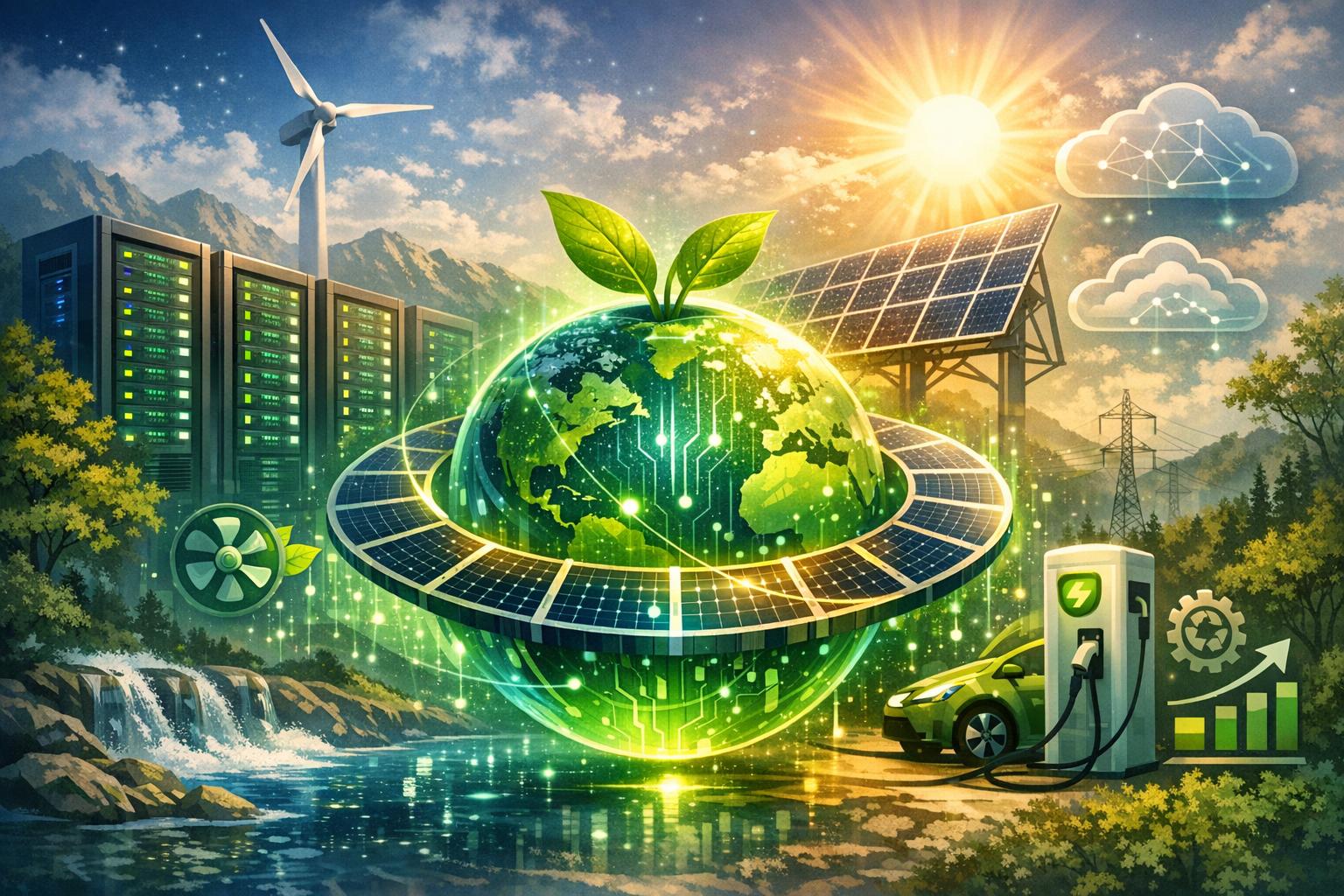
Technological Innovations for Enhancing Data Center Energy Efficiency
Data centers face mounting pressure to balance the surging computational demands of AI with sustainable energy consumption.Cutting-edge advancements such as
- Advanced liquid cooling technologies for targeted heat removal.
- Smart energy management systems using machine learning to predict and adjust energy loads.
- High-efficiency uninterruptible power supplies (UPS) that improve power conversion rates.
- Renewable energy integration such as solar and wind to offset electrical consumption.
| Technology | impact on Energy Efficiency |
|---|---|
| Liquid Cooling | Reduces cooling energy by up to 40% |
| AI Energy Management | Improves power use effectiveness (PUE) by 15% |
| High-Efficiency UPS | Enhances power conversion efficiency by 10% |
| Renewable Integration | Offsets up to 30% of total electrical load |
Strategic Approaches to sustainable Power Management in AI-Driven Facilities
As AI technologies become increasingly complex, the surge in computational power requirements has brought energy consumption concerns to the forefront. facilities housing AI workloads must adopt strategic power management tactics that balance growth with sustainability. Implementing dynamic power allocation systems allows data centers to intelligently distribute energy based on real-time demand, minimizing waste during off-peak periods. Additionally, leveraging renewable energy sources, such as solar and wind, with integrated storage solutions presents a proactive means to offset rising electricity footprints without compromising operational agility.
To enhance efficiency further, many AI-driven facilities are deploying advanced cooling technologies and custom hardware optimized for energy savings. Below is a snapshot of key strategies differentiating sustainable power management approaches:
| Strategy | Key Benefit | Implementation Complexity |
|---|---|---|
| Real-time Power Monitoring | Improved energy responsiveness | Moderate |
| Renewable Energy Integration | Carbon footprint reduction | High |
| Liquid Cooling Systems | Lower cooling costs | High |
| AI-Optimized Hardware | Energy efficiency gains | Moderate |
- Continuous optimization via machine learning enhances predictive maintenance and energy forecasting.
- Modular infrastructure enables scalable energy solutions tailored to AI workload fluctuations.
- Collaborative frameworks promote knowledge exchange on sustainability best practices within the industry.
Policy Recommendations for Balancing AI Development and Environmental Responsibility
To effectively address the escalating power consumption of data centers spurred by AI growth, policymakers must prioritize the integration of stringent energy-efficiency standards. Encouraging the adoption of innovative cooling technologies and leveraging renewable energy sources can substantially reduce the carbon footprint associated with large-scale AI operations. Governments shoudl consider implementing incentives such as tax credits or subsidies aimed specifically at AI companies that demonstrate measurable commitments to sustainability. Moreover, mandatory transparency in reporting energy consumption metrics from data centers can foster accountability and propel the industry toward greener practices.
Central to forward-looking policy frameworks is fostering collaboration between public institutions, private enterprises, and environmental organizations. Establishing a comprehensive regulatory ecosystem that balances technological advancement with environmental stewardship will require ongoing dialogue and adaptive strategies. The following table outlines key policy levers and their intended impact on AI-driven energy demand:
| Policy Lever | Description | Expected Outcome |
|---|---|---|
| Energy Efficiency Mandates | Set minimum performance standards for data centers | Reduce power consumption per computation unit |
| Renewable Energy Quotas | Require a percentage of energy from renewables | Lower greenhouse gas emissions footprint |
| Transparency and Reporting | Mandatory energy and emissions disclosure | Drive industry-wide accountability |
| Incentives for Green Innovation | Grants and tax breaks for sustainable tech | Accelerate development of eco-amiable AI tools |