
The Evolution of AI in Document Forgery
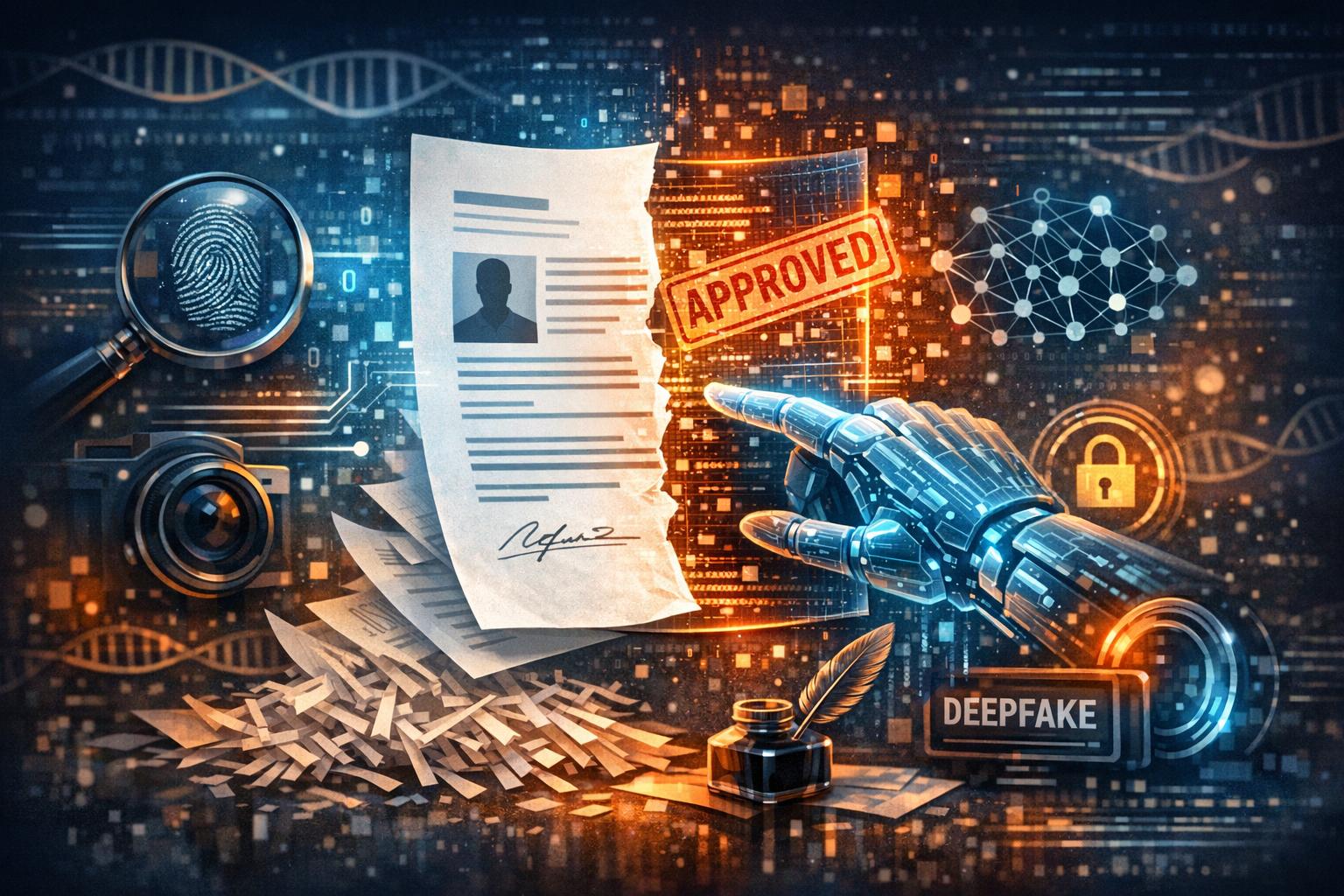
Advancements in artificial intelligence have dramatically reshaped the landscape of document forgery, turning what was once a manual and labor-intensive task into a largely automated process. Modern AI systems leverage deep learning algorithms to replicate handwriting, signatures, and even complex document templates with alarming accuracy. These systems can generate counterfeit identification cards, financial statements, and official certificates by analyzing vast datasets and replicating minute details that human forgers might easily overlook.This technological leap raises urgent concerns for institutions tasked with verifying document authenticity, as traditional visual inspection methods become increasingly insufficient against AI-crafted forgeries.
Key factors illustrating AI’s impact on document forgery include:
- Speed and Precision: AI can produce forged documents at a rapid pace, with precision that mimics genuine records.
- Adaptive Learning: Machine learning models improve continuously by learning from new data, making detection progressively more challenging.
- Wide Accessibility: Available AI tools and open-source models democratize the ability to forge documents,expanding the pool of potential bad actors.
| Era | Forgery Technique | AI Influence |
|---|---|---|
| Pre-AI | Manual replication and alteration | High human effort, low scalability |
| Early AI | Basic digital image editing tools | Improved speed, limited sophistication |
| current AI | Neural networks and generative models | Advanced realism, high scalability |
Techniques Employed by AI to Create Convincing Fake Documents
Modern AI systems leverage advanced machine learning algorithms and natural language processing to generate fake documents that closely mimic authentic ones. Using vast datasets of genuine documents as training material, AI can replicate formatting nuances, typographical errors, and even signature styles, making detection increasingly difficult. Techniques such as generative Adversarial Networks (GANs) empower AI to synthesize realistic text and images in a collaborative, iterative process, continuously improving document authenticity. furthermore, AI-driven Optical character Recognition (OCR) and image manipulation tools enhance the precision of counterfeit creations by enabling seamless integration of altered or fabricated details into scanned documents.
Key elements exploited by AI to fabricate credible forgeries include:
- Style Transfer: Mimics the visual and textual style of existing documents.
- Contextual Language Modeling: Generates contextually relevant and coherent text.
- Image Synthesis: Creates or modifies visual elements such as logos and signatures.
- Metadata Manipulation: Alters embedded data to evade digital fingerprinting.
| Technique | Purpose | Challenge for Verification |
|---|---|---|
| GANs | Realistic content generation | Hard to distinguish real vs. fake visuals |
| Style Transfer | Copy visual/textual style | Blurs authenticity cues |
| Metadata Editing | Hide origin details | Complicates provenance checks |
The Risks and Consequences of Undetected Forged Documents
Failing to detect forged documents can lead to severe consequences that ripple through organizations and individuals alike. Financial institutions may suffer significant monetary losses, as counterfeit contracts or fraudulent identities facilitate unauthorized transactions. The erosion of trust is equally damaging,affecting reputations and undermining relationships with clients,partners,and regulatory bodies. In some cases, the presence of undetected forgeries can even result in legal penalties or compliance violations, escalating the risks beyond immediate financial damage. These risks highlight why meticulous verification processes are non-negotiable in today’s digital landscape.
Beyond financial and legal repercussions, there are intangible yet critical impacts related to data integrity and security. Forged documents can act as entry points for broader cyberattacks or social engineering scams, exposing sensitive systems and information to malicious actors. Organizations must thus not only identify fraud but also reinforce their verification checkpoints to shield operational integrity. The table below summarizes common consequences linked to undetected forged documents, emphasizing the multifaceted nature of these risks:
| Consequence | Impact Area | Result |
|---|---|---|
| Financial Loss | Monetary | Unauthorized funds withdrawal, contract disputes |
| Reputational Damage | Brand Trust | Loss of customer confidence, negative publicity |
| Legal Penalties | Regulatory | Fines, sanctions, compliance breaches |
| security Breach | Information Security | Data leaks, cyberattack vulnerabilities |
Best Practices and Tools for Effective Document Verification
In an era where AI-generated forgeries are becoming increasingly complex, adopting rigorous verification practices is non-negotiable. Combining manual scrutiny with automated tools provides a multi-layered defense against counterfeit documents.experts recommend establishing a checklist that includes verifying document metadata, cross-referencing with official databases, and inspecting watermark or security features under magnification. Leveraging AI-based tools capable of detecting subtle inconsistencies in fonts, formatting, and imagery helps catch forgeries that escape the human eye. Continuous training on emerging forgery techniques is also essential for staying one step ahead of fraudsters.
- Use multi-factor verification: Confirm identity through several independent sources.
- Employ AI validation software: Tools such as document authenticity scanners and forensic image analyzers.
- Regularly update verification protocols: Adapt to new AI forgery trends and technology advances.
- maintain a database of verified samples: Create reference libraries for comparison and anomaly detection.
| Verification Method | Primary Benefit | Typical Use Case |
|---|---|---|
| Metadata analysis | Detects hidden alterations | Digital contracts and IDs |
| Biometric Verification | confirms real-world identity | Access control and official documents |
| Watermark Inspection | validates physical authenticity | Certificates and licenses |