
the Growing Sophistication of AI in Document Forgery
Advancements in artificial intelligence have revolutionized the way documents are created and manipulated, causing a notable challenge for security systems worldwide. Modern AI tools can generate highly convincing forged documents – from passports and driver’s licenses to financial statements and academic certificates – with unprecedented precision. These AI-generated forgeries frequently enough contain intricate details such as authentic-looking watermarks, fonts, and holograms, making customary detection methods almost obsolete. The rapid evolution in neural network architectures and deep learning algorithms allows these systems to mimic human handwriting, signatures, and even subtle paper textures, elevating the risk of undetected fraud in critical sectors including banking, education, and legal affairs.
Key elements contributing to AI’s mastery in document forgery include:
- Generative Adversarial Networks (GANs): AI models that create near-perfect document replicas by learning and reproducing realistic features.
- Automated style transfer: Techniques that replicate specific fonts, inks, and layouts to match official documentation styles.
- Adaptive learning systems: AI that evolves its forgery techniques based on newly observed detection methods.
- integration with IoT and mobile platforms: Facilitating instant forgery creation and dissemination at scale.
| Forgery Aspect | AI Capability | Impact on Verification |
|---|---|---|
| Visual Accuracy | Hyper-realistic images and textures | Increases false acceptance rates |
| Signature Replication | Handwriting simulation with pen pressure details | Complicates manual scrutiny |
| Multi-format Forgery | Documents across digital and print formats | Challenges cross-platform verification |
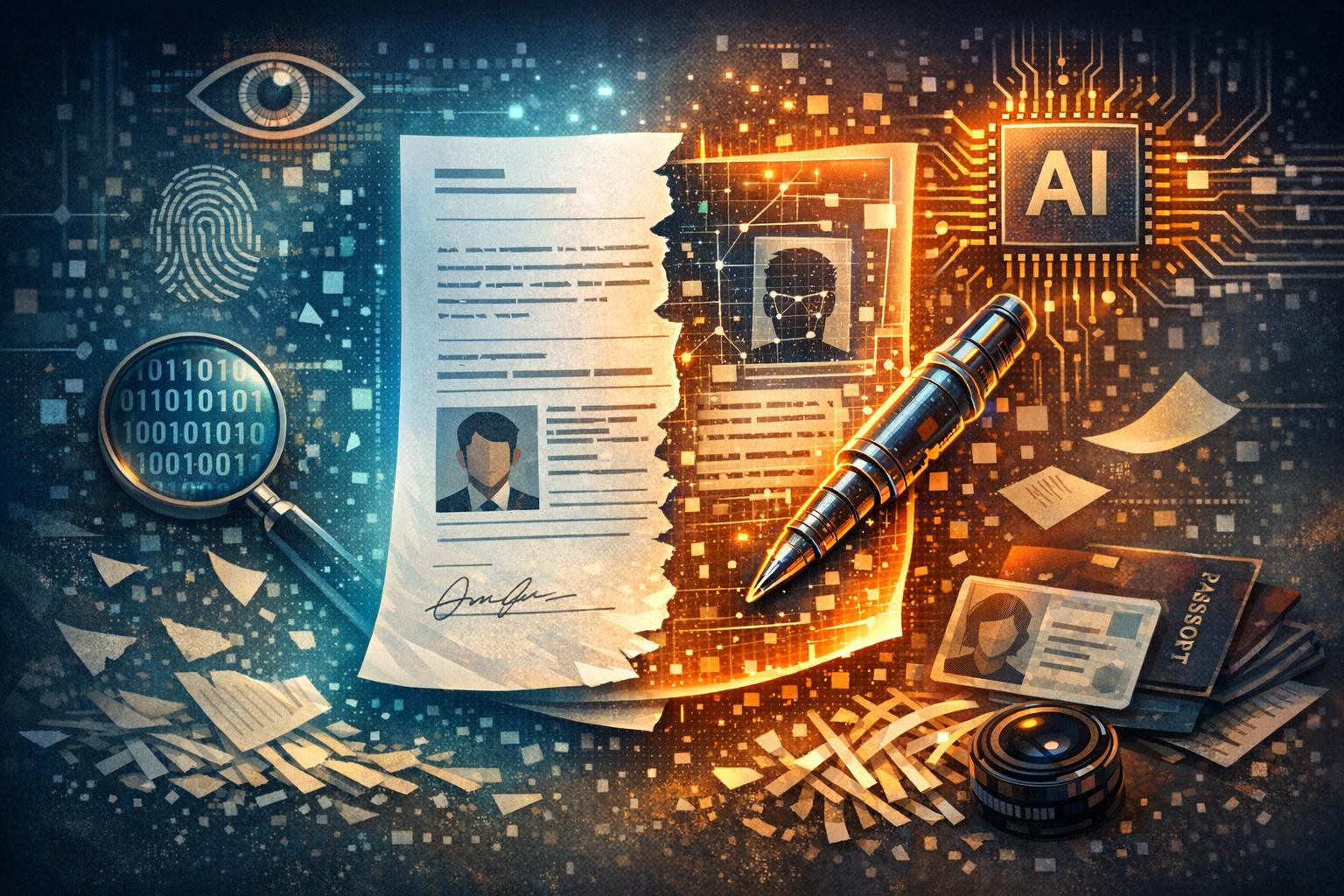
Techniques used by AI to Create Convincing Fake Documents
Advanced artificial intelligence systems leverage a blend of elegant methods to generate documents that appear alarmingly genuine. At the core lies natural language processing (NLP), enabling AI to compose text that mimics human writing styles, tones, and even context nuances. This linguistic fluency is paired with image synthesis technologies, which can recreate official letterheads, signatures, and seals with impeccable precision. Together,these technologies blur the lines between authentic and fabricated documents,making superficial scrutiny ineffective.
- Generative Adversarial Networks (GANs): These neural networks generate and refine document visuals until indistinguishable from originals.
- Contextual language Models: AI understands the purpose and context of the document to produce relevant and consistent content.
- Data Mining and Pattern Recognition: AI extracts common formatting and lexical patterns from genuine documents, replicating them accurately.
| Technique | Function | Result |
|---|---|---|
| GANs | Image and design synthesis | Authentic-looking document visuals |
| Language Models | text generation and contextual understanding | Coherent and relevant content |
| Pattern Recognition | Extraction of stylistic traits | Consistent formatting and tone |
The Risks and Consequences of Undetected Forged Documents
In today’s digital era, the stealthy infiltration of forged documents can lead to catastrophic consequences across various sectors. Financial institutions, legal systems, and even employment processes can be blindsided by counterfeit papers that slip through inadequate verification filters. Undetected forgeries often result in:
- Severe financial losses due to fraud or unauthorized transactions
- Legal disputes and invalidation of contracts
- Damage to organizational reputation and credibility
- Potential regulatory penalties and compliance failures
Beyond immediate losses, forged documents can critically undermine trust within communities and marketplaces. the ripple affect of one undetected fake document can destabilize entire systems, making it imperative that robust verification technologies are deployed to catch even the most sophisticated fabrications.
| Sector | Potential Consequences | Verification Failures |
|---|---|---|
| Banking | Unauthorized loans, money laundering | inadequate ID verification |
| Legal | Falsified contracts, wrongful convictions | Manual document review only |
| Employment | fake credentials, compromised workforce | Lack of digital authentication tools |
Best Practices and Technologies for Effective Document Verification
To counteract the rise of AI-generated document fraud, organizations must adopt multi-layered verification strategies that combine advanced machine intelligence with human oversight. Key technologies include optical character recognition (OCR) enhanced by artificial intelligence, which can detect subtle inconsistencies in fonts and text alignment that often escape the naked eye.Additionally, blockchain-based validation ensures documents are tamper-proof by providing immutable proof of authenticity and a transparent audit trail. Integrating biometric authentication, such as facial recognition or fingerprint verification, further strengthens identity confirmation, linking the document directly to the rightful holder and rendering forgeries ineffective.
Effective implementations often revolve around a robust set of tools and processes, as summarized here:
| Technology | Primary Function | Key Benefit |
|---|---|---|
| AI-powered OCR | Text extraction and anomaly detection | Detects visual irregularities and metadata inconsistencies |
| Blockchain | Immutable record keeping | prevents document alteration and ensures traceability |
| Biometrics | Identity verification | Links documents to the authentic user securely |
| Human Expert Review | Validation of flagged documents | Provides critical judgment for complex cases |
moreover, organizations should cultivate a culture of continuous vigilance by regularly updating their verification algorithms against evolving AI forgery techniques and training staff to recognize emerging risks. This holistic approach creates formidable barriers to fraud while maintaining user trust in document-dependent processes.