
The impact of Large AI Models on Cultural diversity in Media
Large AI models have revolutionized media creation by enabling rapid generation of content across languages, genres, and formats. However, this technological advancement carries with it the risk of homogenizing cultural expression. because these models are predominantly trained on large-scale datasets curated from dominant global cultures,their outputs often reflect a narrow subset of stylistic conventions and thematic perspectives. Over time, this levelling effect can dilute the richness of indigenous narratives, regional idioms, and unique artistic traditions that have historically defined diverse media landscapes.
Consider the transformation happening within global media ecosystems, were AI-generated content starts to prioritize mass appeal and algorithmic efficiency. The table below illustrates some key factors contributing to this trend:
| Factor | Impact on Cultural Diversity |
|---|---|
| Training Data Bias | amplifies dominant cultural norms |
| Algorithmic Optimization | Prioritizes familiar styles for broad audiences |
| Content Standardization | reduces experimental and local forms |
| Scalability & Cost Efficiency | Encourages formulaic approaches over nuanced storytelling |
- Loss of linguistic variety: Minority languages receive less representation, reducing accessibility.
- Stylistic erosion: Unique aesthetic elements get overshadowed by globally trending motifs.
- Cultural misinterpretation: Nuanced contexts get flattened, risking misunderstanding or stereotyping.
To preserve the multifaceted identity of global media, conscious efforts must be made to diversify training inputs and develop AI systems that respect and amplify marginalized voices rather than subsume them under a homogenized digital culture.
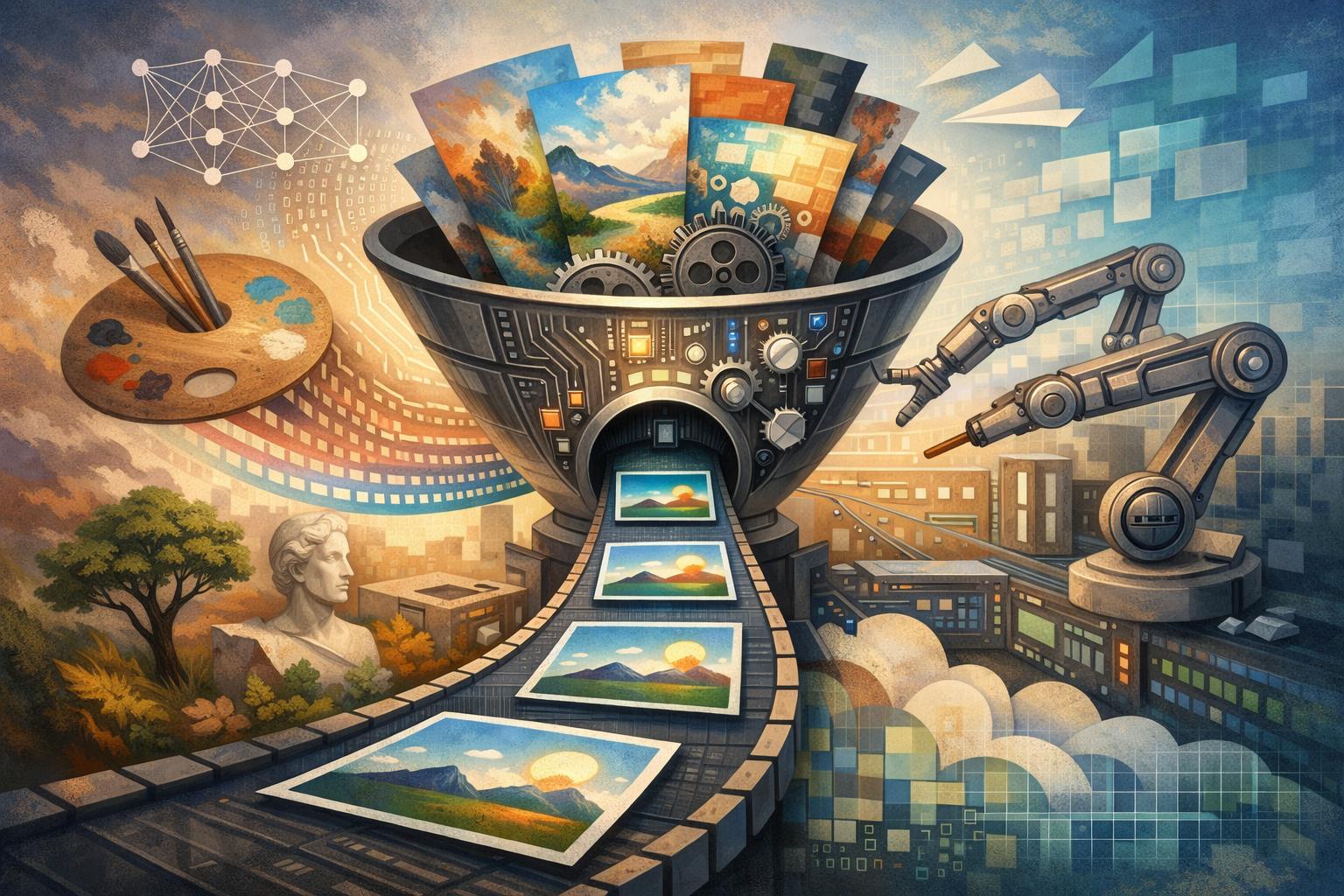
Mechanisms by Which AI Models Normalize and Flatten Artistic Styles
Artificial Intelligence models, especially the large-scale ones trained on vast datasets, tend to reduce the rich, multilayered uniqueness of artistic styles to more generalized representations. This process is largely driven by the models’ core objective: to find patterns that consistently predict outcomes across diverse inputs. As a result, stylistic nuances-the subtle brushstrokes distinguishing one painter from another or the intricate textures native to specific media-become averaged or “flattened” during training. The AI doesn’t inherently prioritize or preserve cultural or historical context; instead, it encodes styles as simplified vectors in a high-dimensional space, often causing hybridized outputs where distinctive characteristics blend into an indistinct uniformity.
Key mechanisms contributing to this flattening include:
- Vector Space Compression: Artistic elements are compressed into dense numeric representations, where marginal features are often lost.
- Dataset Homogenization: Large training sets mix a broad spectrum of styles and media, inadvertently promoting averaged traits over unique idiosyncrasies.
- Objective Functions: Loss functions prioritize minimizing error, pushing models to favor common stylistic features rather than rare or context-specific ones.
- Transfer Learning Bias: Pretrained models carry forward their initial learned biases, which are challenging to recalibrate without explicit, curated data.
| Mechanism | Effect on Artistic Style | Example |
|---|---|---|
| Vector Space Compression | Loss of unique brushwork details | Blending impressionistic strokes into smooth gradients |
| Dataset Homogenization | Smoothing of cultural-specific motifs | Customary calligraphy patterns diluted in mixed datasets |
| Objective Functions | Favoring common aesthetics | Generic color palettes dominating outputs |
Consequences of Style Homogenization on Creative Expression and Cultural Narratives
As large AI models increasingly dominate creative industries, there is a growing risk that the nuances that distinguish cultural and personal artistic expressions may be streamlined into a uniform, generic output. This flattening effect undermines the depth and richness traditionally conveyed through diverse stylistic choices. When algorithms prioritize patterns recognized from vast datasets, individual and localized creative voices battle to stand out, leading to a dilution of cultural narratives that rely on unique visual, linguistic, and thematic elements. Consequently, the once vibrant mosaic of cultural storytelling faces erosion, simplifying complex histories and identities into homogenized digital artifacts.
- Loss of stylistic diversity: AI-generated content frequently enough reflects the dominant trends from its training data, marginalizing less prevalent cultural modes and hybridity.
- Cultural flattening: The repeated replication of widely accepted stylistic conventions can cause smaller or emerging cultural narratives to become overshadowed, limiting global cultural discourse.
- creative stagnation: Artists might feel pressured to conform to AI-friendly aesthetics that guarantee visibility, suppressing experimental or unconventional approaches.
| Impact | Manifestation in Creative Media | Long-term Effect |
|---|---|---|
| Uniformity | repetitive visual motifs and predictable narrative arcs | Diminished cultural richness |
| Censorship by algorithmic bias | Exclusion of niche dialects,art forms,or storytelling styles | Reduced representation of minority voices |
| Creativity reduction | Preference for safe,formulaic content over risk-taking | Innovation slowdown in artistic practices |
Strategies for Preserving Cultural Richness in AI-Generated Content
Preserving the vibrancy of diverse cultures within AI-generated content demands intentional design choices and ethical frameworks. Developers and content creators must embed contextual sensitivity into training data, ensuring algorithms recognize and respect the nuanced expressions unique to each culture. This involves curating datasets that highlight traditional motifs, languages, and storytelling methods rather than defaulting to homogenized or dominant cultural norms. More importantly, ongoing collaborations with cultural experts and communities are essential to verify authenticity and prevent the inadvertent erasure or misrepresentation of cultural identities in outputs.
- Incorporate diverse linguistic styles: Train models on regional dialects and indigenous languages to maintain linguistic heritage.
- Context-aware generation: Use metadata tagging for cultural context to guide AI outputs.
- Community-driven validation: Implement feedback loops where cultural groups review and refine AI-generated content.
| Strategy | Key Benefit | Example Application |
|---|---|---|
| Curated Training Sets | Authenticity | Traditional Art Style Generation |
| Dynamic Metadata Tags | Contextual Relevance | Regional Storytelling AI Bots |
| Collaborative Reviews | Cultural Respect | Inclusive Media Content Creation |
Another critical approach lies in balancing technological innovation with cultural stewardship. While AI excels at pattern recognition and replication, it often lacks the intuitive grasp of a culture’s evolving values and unspoken narratives.Embedding explainability features in AI systems allows creators to trace the origin and rationale behind generated outputs, fostering transparency. This transparency is crucial when addressing sensitive cultural elements that require delicate handling. In parallel, adaptive frameworks must be developed to allow AI models to evolve alongside cultural shifts, ensuring that digital preservation efforts do not fossilize cultures into static representations but promote living, growing heritages.