
The Role of Artificial Intelligence in Expanding Creative Boundaries
Artificial intelligence acts as a catalyst for innovation by transcending traditional creative limitations. It provides artists, designers, and creators with powerful tools to amplify thier imagination rather than simply replacing human ingenuity. By harnessing AI algorithms, creators can explore novel concepts faster, generating ideas that might take months or years to materialize through conventional means.This dynamic fosters an environment where experimentation is not just encouraged but is essential, pushing the boundaries of what is considered possible in genres ranging from digital art to music composition.
Key areas where AI revolutionizes creativity include:
- automated content generation enhancing brainstorming sessions
- pattern recognition driving new design aesthetics
- adaptive learning systems allowing personalized creative workflows
- Collaborative AI agents augmenting artistic collaboration across disciplines
| Creative Discipline | Traditional Approach | AI-Enhanced method |
|---|---|---|
| Visual Arts | Manual sketching & painting | Generative adversarial networks for style transfer |
| Music | Instrumental composition | Algorithmic composition and sound synthesis |
| Writing | human-authored drafts only | AI-assisted storytelling and content drafting |
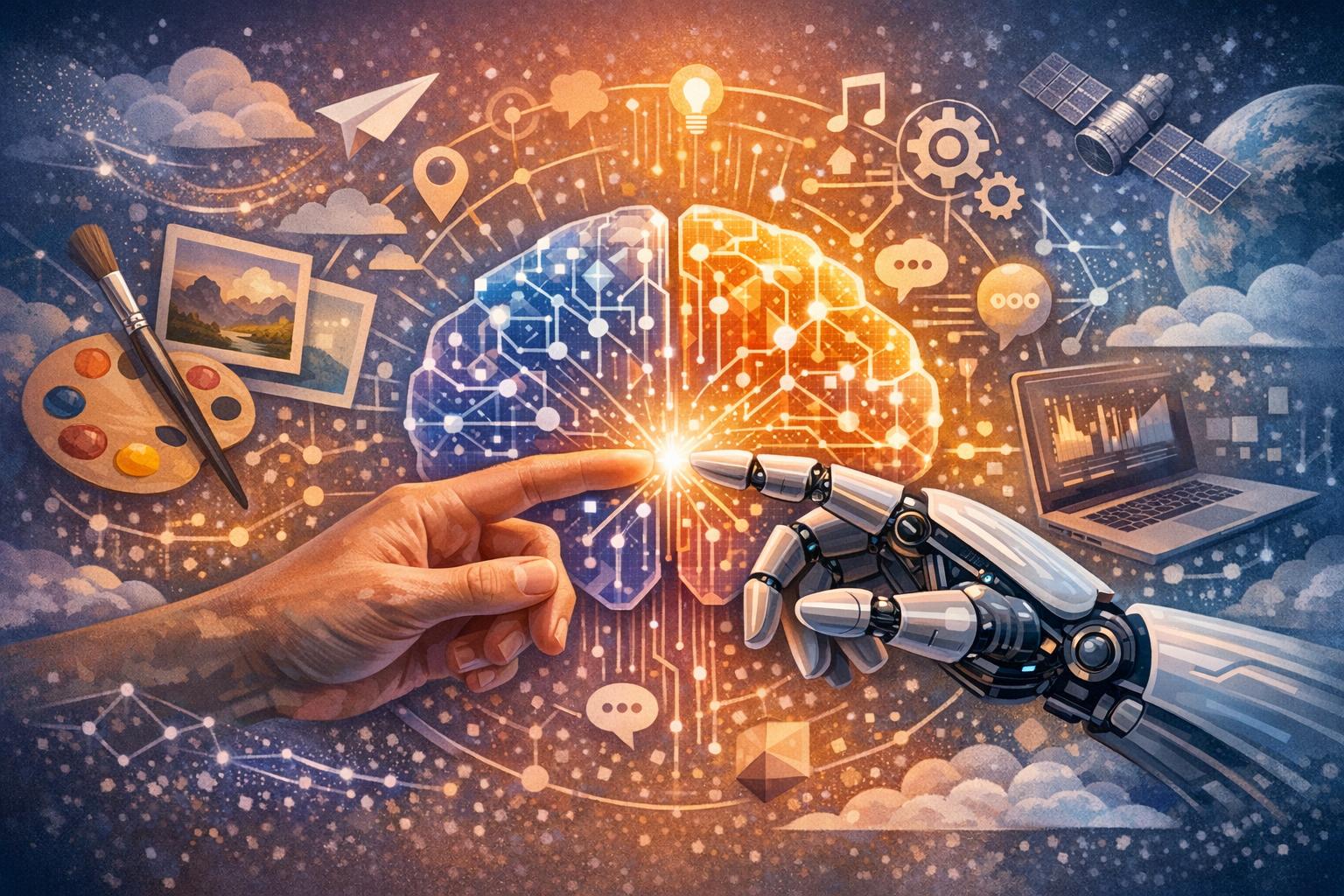
Strategies for Effective Outsourcing of Creative Tasks to AI Systems
When delegating creative tasks to AI systems, it is crucial to define clear objectives and boundaries to harness the technology’s strengths without stifling innovation. Establish a collaborative workflow where AI-generated outputs serve as springboards for human refinement rather than final products. This approach leverages AI’s speed and pattern recognition to handle repetitive or data-intensive portions,freeing human creatives to focus on nuanced decision-making and emotive storytelling. Equally significant is selecting AI tools that align with the project’s style and complexity, ensuring coherence and consistency throughout the creative process.
Key principles to optimize this collaboration include:
- Iterative feedback loops: Continuously review and tweak AI outputs to maintain artistic vision.
- Contextual training: Customize AI systems with domain-specific data to improve relevance and originality.
- ethical considerations: Maintain transparency about AI involvement and respect intellectual property rights.
| Strategy | Benefit | Implementation tip |
|---|---|---|
| Define clear roles | Prevents overlap and maximizes efficiency | map creative tasks by complexity and assign accordingly |
| Customize AI datasets | Boosts output relevance | Incorporate project-specific samples and styles |
| Feedback integration | refines quality and alignment | Schedule regular review sessions |
fostering Innovation Through Experimentation with AI-Driven Tools
Embracing AI-driven experimentation empowers organizations to unlock unprecedented levels of creativity. By integrating these advanced tools into the innovation process, teams gain the agility to test new ideas rapidly, refine concepts iteratively, and uncover novel solutions that were previously unimaginable. This methodology encourages a culture where failure is viewed as a valuable step toward breakthrough insights rather than a setback.Central to this approach is the use of AI to simulate scenarios, analyze patterns, and generate creative alternatives-helping innovators push boundaries without the high cost traditionally associated with trial and error.
Triumphant experimentation with AI tools involves a balance between structured exploration and open-ended finding. Key strategies include:
- Setting clear hypotheses and goals for each experiment while remaining flexible to unexpected outcomes.
- Leveraging AI-generated insights to inform iterative design and content decisions quickly.
- Encouraging cross-disciplinary collaboration to blend human intuition with machine precision.
| Experiment Aspect | AI Contribution | Creative Outcome |
|---|---|---|
| Idea Generation | Rapid ideation via language models | Diverse creative concepts |
| Prototyping | Automated design simulations | Efficient iteration cycles |
| feedback Analysis | Sentiment & trend detection | Data-driven refinement |
Best Practices for Balancing Human Input and AI Assistance in Creative Processes
To harness the full potential of AI in creative endeavors,it is indeed crucial to maintain a dynamic interplay where human intuition guides AI-generated outputs rather than being overshadowed by them.Emphasizing collaborative iteration can lead to richer outcomes: start with a broad AI-generated concept, then refine it through human critique and experimentation. This approach ensures that creativity remains authentic and contextually grounded, steering clear of formulaic or repetitive AI patterns. Key techniques include:
- Selective prompting: Craft precise input prompts to steer AI output in a preferred direction without fully scripting the outcome.
- feedback loops: Continuously evaluate AI suggestions, modifying prompts or inputs to push boundaries thoughtfully.
- Mixing mediums: Combine AI-generated content with human-crafted elements such as sketches, notes, or prototypes to preserve originality.
another best practice lies in establishing clear roles and boundaries for AI tools within the creative workflow. Identify repetitive or data-driven tasks where AI can excel,thereby freeing human creativity for higher-level ideation and emotional resonance. The following table illustrates a streamlined division of labor:
| Task | Human Role | AI Role |
|---|---|---|
| Idea Generation | Conceptualize themes and emotional tones | Generate diverse concept iterations |
| Content Refinement | Evaluate coherence & unique voice | Suggest stylistic adjustments |
| Finalization | Make subjective decisions & final edits | Automate formatting & error checks |
In embracing this balance, the creative process benefits from both expansive AI capabilities and irreplaceable human insight, resulting in a harmonious fusion rather than a one-sided dependency.